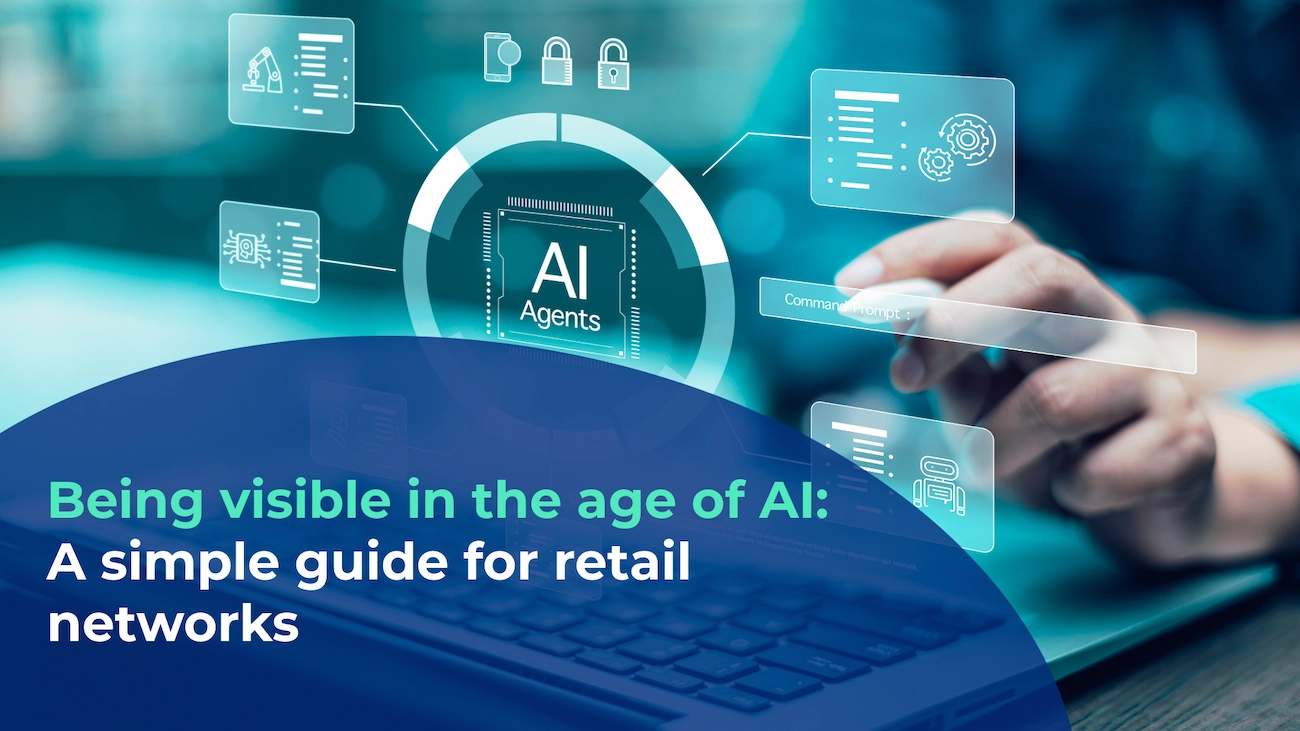
Being visible in the AI era: a simple guide for retail chains
To appear in AI-generated results, each point of sale must have clear, complete, and synchronized local pages. A structured Store Locator and up-to-date listings are essential to help engines correctly interpret data. Mobilosoft supports networks in this essential compliance to capture local traffic.
In the AI era: why local visibility plays out differently today
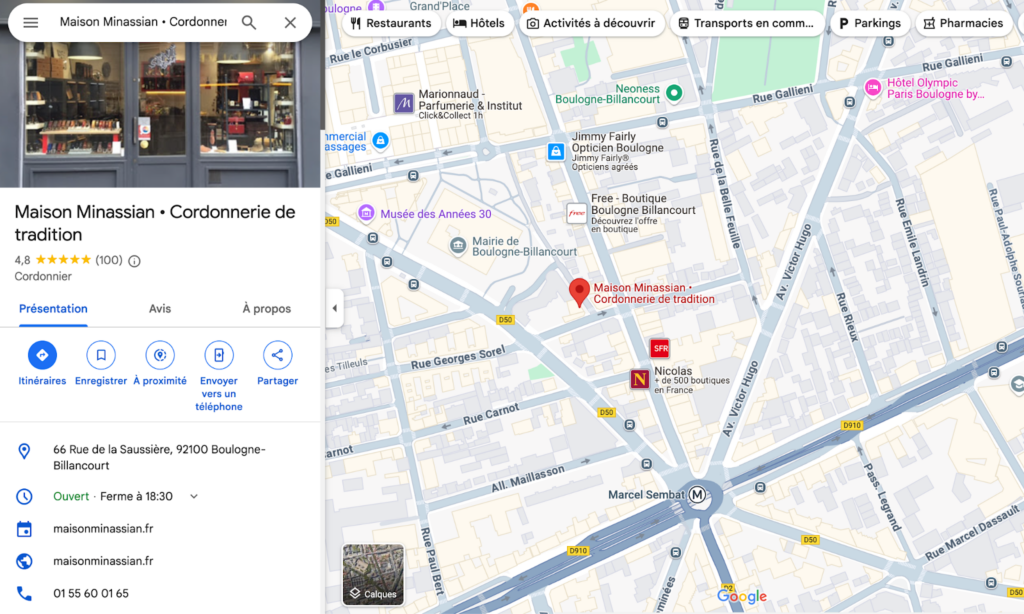
Before entering a store, customers first check its online presence. A query like "shoe repair in Boulogne" or "hairdresser open today" is enough to make, or lose, a visit.
Until recently, these searches were almost exclusively done through Google or Maps. But artificial intelligence has changed the rules. Tools like ChatGPT or Bing Copilot, now integrated into the daily lives of many users, no longer just provide links. They generate a unique response, built from sources deemed reliable, up-to-date, and structured. If your local data does not meet these criteria, your network disappears from the radar.
Optimizing local SEO in the AI era: the fundamentals
Local SEO and generative AI: what interactions in 2025?
L’IA generative does not reference, it answers. Google search results evolve : we move from a ranking logic to a synthesis logic. Search engines like Google, Bing or those integrated into voice assistants analyze the web to extract relevant and immediate answers. This evolution radically transforms the way users discover a point of sale.
In 2025, it's no longer just about being present: you need to appear in the results generated by these new tools.

SEO in classic search engines vs AI engines: what's changing
Classic search engines like Google have so far operated on well-known rules: keywords, backlinks, domain authority, etc. With the advent of AI, other criteria come into play: clarity of local data, consistency across platforms, regular updates of schedules, photos, and reviews.
The influence of these elements on SEO is becoming stronger. And businesses must adapt their strategy according to the results they want to achieve locally.
GEO: adapting to artificial intelligence in search engines
GEO and local SEO: what are we talking about?
Generative Engine Optimization (GEO) is the natural adaptation of local SEO in the era of artificial intelligence. It's about preparing your pages, data, and local listings to be understood, used, and cited in AI-generated responses.
This involves producing clear, relevant, up-to-date content, disseminated consistently. The goal: to gain visibility with AI engines, and thus with customers.
Search engine algorithms in 2025: what they analyze
Search engine algorithms, powered by AI models, cross multiple signals: user preferences, information consistency, recent reviews, and responses to voice queries. They filter out ambiguity, discard ambiguous content, and favor well-structured data.
Optimize for response engines: what it entails in practice
1. Create a structured website to respond to a local query
The first step is to have a website equipped with a high-performance Store Locator. Each point of sale must have its own page, with precise, geolocated and accessible data. This facilitates the processing of information by Google's algorithms or any other search engine.
A Store Locator well structured also helps with the generation of localized content, a decisive point in positioning on specific queries.
2. Disseminate your information on all useful platforms
To save time and remain consistent, it is essential to synchronize all your local data (schedules, services, contacts) across all platforms: Google Business Profile, Facebook, Waze, Apple Plans, Bing, etc.
A well-managed online presence helps search engines make connections between sources, verify the reliability of data, and integrate it into generated search results.
3. Produce useful content and answer frequently asked questions
Optimization for response engines is no longer just about keywords. You need to generate useful content, answer frequently asked questions, and continuously adapt your strategy.
This local SEO content may include:
- FAQs by point of sale,
- descriptions of specific services,
- clear answers to the most frequent local queries.
Getting the most out of AI: how Mobilosoft supports you
Mobilosoft helps retail chains adapt to this new logic. Our tools allow:
- structure a Store Locator optimized for artificial intelligence,
- automate the update of listings on more than 30 platforms,
- track the performance of each point of sale according to local search results,
- help search engines correctly interpret your data.
It's a comprehensive, yet fluid, approach to remain visible without overloading your teams. You gain efficiency on repetitive and time-consuming tasks, and benefit from clear management.
Discover how artificial intelligence transforms local visibility
The use of artificial intelligence is not limited to large companies. It affects all networks, including the most local ones. To appear in the results, it is no longer enough to exist on Google. It is now necessary to understand how search engines choose the companies to cite.
Here's how Mobilosoft helps you take back control:
- SEO in the AI era: guidance on good GEO practices
- Automated update: your listings always aligned
- Audit offered: analysis of your online visibility in a few clicks
TL;DR: Complete guide to remain visible in the AI era
To recap:
- Content must be clear, localized, up-to-date
- Generative AI can transform your local pages… if they're ready
- You need to optimize existing structures, not create new ones
- Content creation becomes a team reflex, not just a marketing action
- And the expertise of partners like Mobilosoft helps businesses improve their positioning without burdening their teams
🚀 Bonus: free audit of your local visibility
Mobilosoft offers a 100% free audit of your local digital visibility.
To take advantage of it,
Save time and gain visibility from today
Schedule a personalized demo and see how the platform optimizes every local action in your network.


Latest articles
Discover other selected articles to further explore the topic. To continue exploring the levers that really make a difference for your points of sale.