The checklist for decentralizing Local Digital Marketing for your network
A well-managed decentralization allows for greater responsiveness and local performance, while maintaining a unified brand image. This involves centralizing information, content libraries, simple processes, and training adapted to the field. This checklist summarizes the key steps to successfully manage the transition and optimize local network referencing.
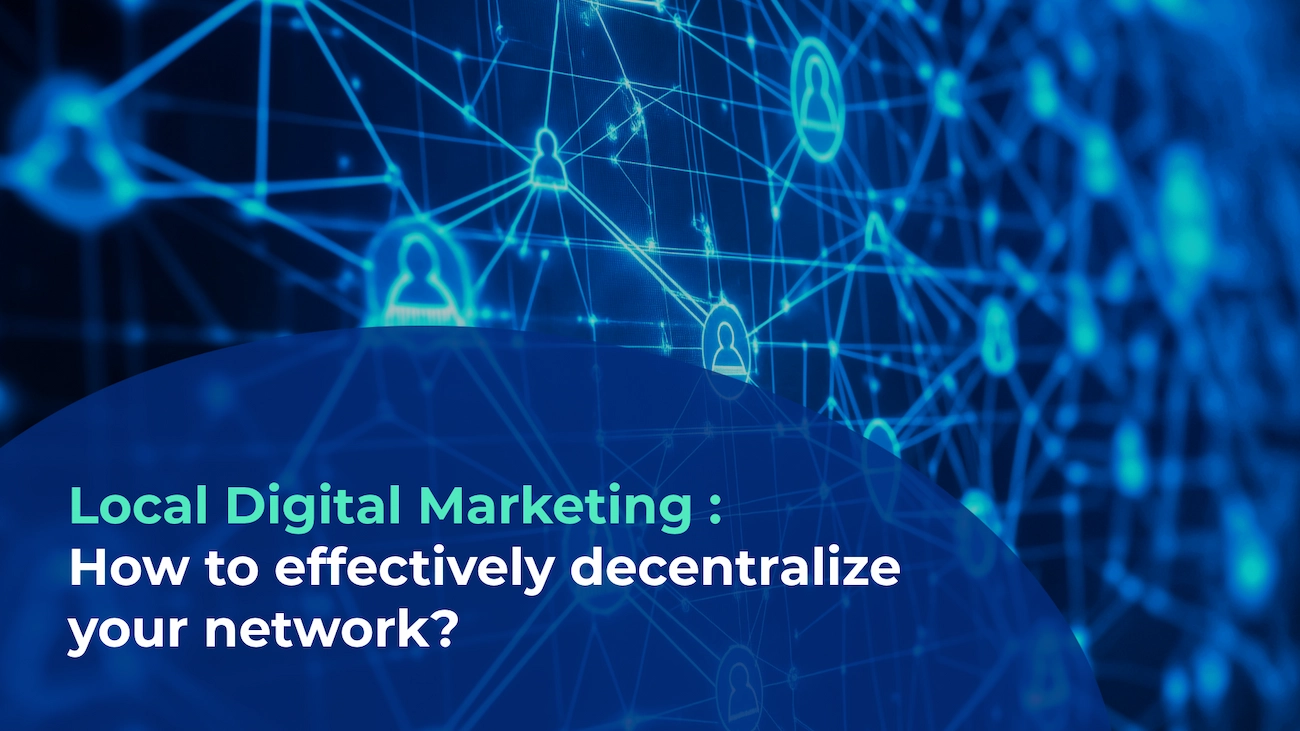
The decentralization of digital marketing of a brand network is a very current issue.
Who better than the local to quickly update its own information and communicate about its products, services and news?
However, the term decentralization sometimes scares marketing managers. Although in the long run it means a gain in time both at the headquarters and at the local level, certain points can be blocking: how to organize decentralization, which tools to use, how to train your network, what degree of autonomy to give them, how to guarantee the respect of the brand image,...
Here is a checklist - special franchise networks - to help you organize the decentralization of your network's local digital marketing!
[th-button text="Download the checklist" href="URL LP"]
Determine the degree of decentralization
Each network has its own specificities to be taken into account for the degree of decentralization to be implemented: number of people at headquarters, network structure, local autonomy,... It is essential to consider these factors first before starting. Initially, estimate:
- the local entity's ability to manage different aspects on a daily basis (updating information, publishing content, responding to customer reviews,...)
- the tools to be put in place
- the necessary training time
Sales outlet information management
Information about points of sale is the basis for good SEO, without which it is impossible for Internet users to find it! Manage information about its points of sale on all media that matter and make sense for your industry.
- Create the local listings of your points of sale: Create the local listings of your points of sale on Facebook and Google. Don't forget to optimize the local pages of your store locator.
- Claim the propriété of local records: If the records have déjà été created and you n’en have not the propriété, claim the local pages of your points of sale. This allows you to unify the records while respecting the l’image of brand and d’avoir accès to performance.
- Centralize management via a platform: To update the information of your établissements, and délégate this management to your réseau, provide them with a platform that centralizes the management of all local pages across various média (Google, Facebook, GPS, …) and makes the updates à simultaneously.
This allows you to have a view of the entire set of your réseau cards, while giving local access for managing their own page. - Organize basic information: Ensure the respect of your brand image by setting the basic elements of local listings: name, description, services, regular hours, photos,... Allow the local team to make certain updates such as exceptional hours or new products or services.
- Training à schedule management: Note à do not confuse regular hours and exceptional hours! On public holidays, works or others, it is important to only modify the exceptional hours, according to the status and opening hours.
- Update the services and products: Local pages are the digital showcases of your points of sale: they allow reflecting what customers can find at your place. It is therefore recommended to regularly update the services and products.
Customer Review Management
Managing reviews on Google and Facebook is a major factor in the online reputation of a point of sale. Here are some keys to decentralize the management of these reviews:
- List the most recent topics: Randomly consult 100 customer reviews published on your local pages. List, via review verification, the most recent topics that users mention in their reviews. For example: client reports maintained by staff, quality-price ratio, waiting time, store hygiene, etc.)
- Create a base of réponses génériques: Based on these thématiques récurrentes, create a base of réponses génériques. Concrètement, write 4 réponses génériques for each thématique so you can use them randomly and vary the réponses.
- Share this bibliothèque of réponses génériques à your réseau: Share à your réseau these réponses types via a management platform or d’un document séparé.
- Train à the réponse to reviews: Train your réseau à the management of réponses to customer reviews: à how often to respond, what types of réponses to use, which tool to use,...
One point à not to underestimate is to explain why it is important to properly répondre to customer reviews and the l’impact this has on the référencement online of the point of sale, its visibilité to internet users and on the l’image of the l’enseigne. - Use a centralisé tool for review management: To facilitate management à your réseau, provide them with a tool allowing d’use easily the réponses génériques, to filter the réponses, and to track statistics.
[th-button text="Download the checklist" href="URL LP"]
Images
A good way to boost your SEO is to regularly publish images on your local Facebook, Google, and store locator pages. These can be images of the interior, exterior, your products, or even staff.
- Post product images: The images of your products are the easiest à publish on your listings because you just need to share them à your réseau so that they can publish them on the appropriate médias.
- Post images of staff, of the interior or exterior of an establishment: These images are more complex because they involve an intervention / contribution from your network. Today, smartphones have increasingly optimal cameras. Train your network to take good photos (light, angle, ...) through a workshop or online training. Ask your network to use their smartphone to take a photo of their establishment from all angles, it will take them little time.
- Post régulièrement: Once the photos are taken, the’important is to’have a fréquence regular of publishing your images on your local pages. The more you êre regular, the better your référencement. Rather than publishing all images d’un coup, consider à to space this over time. For example, éestablish a fréquence of publishing d’une image each month on the’ensemble of your local pages.
- Set up a simple publishing process
Set up a simple process so that your network carries this out regularly - Centralize image management via a platform: You can make available to them a platform that centralizes image management and allows publishing images on all media simultaneously, without needing to repeat the operation on each media individually.
Products & Menus
- Detail your products or menus: Think about describing the products you offer so that the client knows exactly what you provide. Any brand, ranging from a restaurant to a supermarket, can specify the full range of products sold on site. This detail can be decisive. Indeed, a potential client will more easily go to the restaurant or brand that has an easy-to-access product listing.
- Post regularly: Again, it is important to maintain consistency in the frequency of your posts. Take advantage of seasons, actions or promotions of your brand to highlight the products you offer. Be clever and communicate about your best‑selling products!
- Prepare a product library: The headquarters must take care of setting up a library with photos and descriptions of each product. This library will facilitate the publishing process by the local. It will only remain to select the products to highlight and post the photos and descriptions.
- Centralize image management via a platform: Use a single platform to centralize the’entire set of images and descriptions to enable simultaneousé publishing across all mediaé. The use of a single platform will facilitate the entire operationsé.
Local publication management
It is important to fréquently publish content on its local Facebook, Google and store locator pages. How to organize the décentralization of this for l’ensemble d’un réseau, while respecting l’brand image of l’enseigne ?
- Identify commercial actions: Throughout the year, a number of commercial actions are implemented in your establishments (promotion, sales, peak periods, new products, etc.). To communicate as effectively as possible, identify all quarterly or annual actions that will be implemented.
- Create a communication plan: Based on these actions, create a communication plan that includes each communication to be implemented, and the time when these must be published. You will then have a publication calendar.
- Choose the media to communicate: Once the calendar is established, you can select the media that your network will use for each publication.
- Create a content library: Prepare a content library that can be used throughout the year by the local: production of visuals, choice of descriptions, and CTAs if necessary.
- Share the communication plan and the content library: You can share at each establishment the content templates, as well as this publishing calendar so that they can be reused and published in due time.
- Train à content publishing: Provide é training on the various aspects of campaign publishing: when to publish a campaign (fréquency and key clés), how to do it (via which tool, the steps à follow to publish). N’forget to d’include a section on why publishing a campaign or a post on your local pages and l’impact it has on référencement of the point of sale and l’image of l’enseigne.
- Create tutorials: You can create video or pdf tutorials to remind them of the steps to follow to create and launch a campaign.
- Leave it to the local: You can also decide if your network can publish content without using your templates → Using their own content
Network Training
Marketing departments have certain experience in best practices to follow to improve the online ranking of points of sale and increase web-to-store traffic. This is not the case locally because most of the time it has not been trained. Here are some points that will allow it to gain autonomy:
- Train in Local Digital Marketing: Provide a training that allows you to explain the ins and outs of local digital marketing. It is important to explain the impact of digital on consumer search behavior and how this influences foot traffic.
- Support and Train Daily: To êbe fully autonomous in the daily management of their Local Digital Marketing, your réseau needs d’un support and d’une training on the tools à use and best practices.
- Identify the training actors: Identify the people who can help you à train your réseau like the network facilitators or an external person à l’company expert in this domain.
- Select the training tools: Currently there are quite varied ways to train your network, such as training platforms, e-learning, workshops, etc.
Test the different contents and choose the one most suited to your network and your challenges. - Present news and updates: If necessary, regularly organize webinars or seminars to present the updates related to local digital marketing
Conclusion
Good referencing is achieved through a complete Facebook and/or Google listing. To achieve this, several things need to be done: fill in the listing with all required information, regularly post images for events or promotions, manage customer reviews and local publications. By following our checklist, all conditions will be met to enable the decentralization of your local digital marketing. The goal is to empower your franchisees while alleviating some of the workload... A win-win that allows you to increase your in-store visits!
[th-button text="Download the checklist" href="URL LP"]
Save time and gain visibility from today
Schedule a personalized demo and see how the platform optimizes every local action in your network.


Latest articles
Discover other selected articles to further explore the topic. To continue exploring the levers that really make a difference for your points of sale.