Boost the visibility of your points of sale with local ads
Local ads are a powerful lever to boost store visibility, but their effectiveness depends on good coordination between headquarters and points of sale. By structuring roles, providing templates, and avoiding cannibalization between campaigns, brands optimize their investments and attract more customers to stores.
.webp)
The “local ads” and “local campaigns” are extremely powerful advertising formats for retail chains. Indeed, this format allows physical stores to promote their products or services in a geographical area around the brand. The magic of this is that an ad will be on digital platforms at the right moment: when the prospect nearby is looking for a brand like yours or a service/product you offer.
In this article, discover:
- What is a local ad
- Roles around local ads
- Local ads tools
- Mistakes to avoid during local campaigns
- The indicators to follow for a good local ads campaign
1. What is a local ad
A local ad consists of digitally promoting your store in a geographical area around it. The system ensures that the most important information (name, address, opening hours, images, etc.) about your brand is automatically displayed on the digital platforms of potential customers in the vicinity.
The goal is to attract the customer to the point of sale. This strategy is called “Web-to-store” and involves optimizing the online visibility of its points of sale on the largest media to encourage visits to the store (for more information, see our article on the subject). To do this, brands must create local pages for each of their physical stores on Facebook and Google, for example. With these pages, it is then possible to create advertising campaigns linked to them.
A local ad is very useful for reaching potential customers because it increases online visibility of one or more points of sale. Reaching new customers is generally complicated. That's why it's wise to be on all major digital platforms like Facebook and Google. It's by being so present that we make sure a prospect will automatically associate the brand name with a specific product or service.
A local ad campaign therefore allows overall to achieve business objectives by maximizing visits to your store.
2. Roles around local ads
It's essential to note that retail chains are composed of distinct levels: the headquarters, representing the overall brand name, and the local store, representing the physical stores bearing the brand name. Both entities obviously play roles in implementing local campaigns.
- The headquarters has the role of monitoring all advertising campaigns posted by the local. The latter must ensure that all campaigns remain consistent and correspond to the brand image. To do this, it is advisable for the headquarters to make available a library of pre-formatted advertisements that sales outlets can then easily use to launch a campaign. The headquarters can also have the role of reporting campaigns to sales outlets.
- The local has the role of posting local advertising campaigns for all interesting communications about their stores. A store can, for example, communicate during promotions, new products, in-store events, or collaborations. The local must ensure that all its communications align with the image of the brand it represents. Additionally, it must ensure that this communication does not overlap with that of another point of sale in the same network.
3. Local ads tools
There are several search engines and platforms that allow you to create local ads like Google, Facebook, Microsoft Bing and others… The most relevant tools by their user volume for retail chains are:
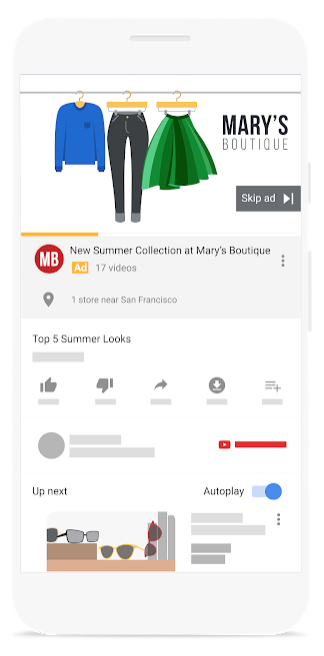
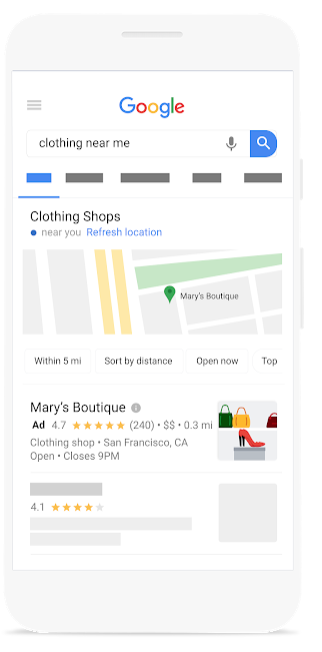
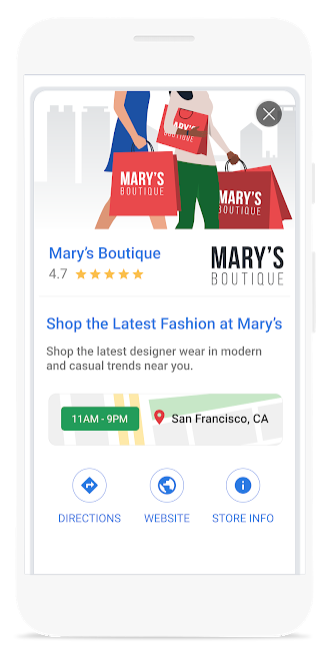
- Google: 3 Google products will be used in setting up a local campaign: Google Search, Google Maps and Google Display. These tools will direct the prospect to the Google Maps interface and the Google Business Profile (GMB) listing of the point of sale. This is to provide the most information to encourage in-store visits. These tools also allow adjusting bids based on the distance of the consumer from the point of sale. The key in these tools is to have a GMB listing as complete and up-to-date as possible. For more information, see our article “The benefits of Google local campaigns”
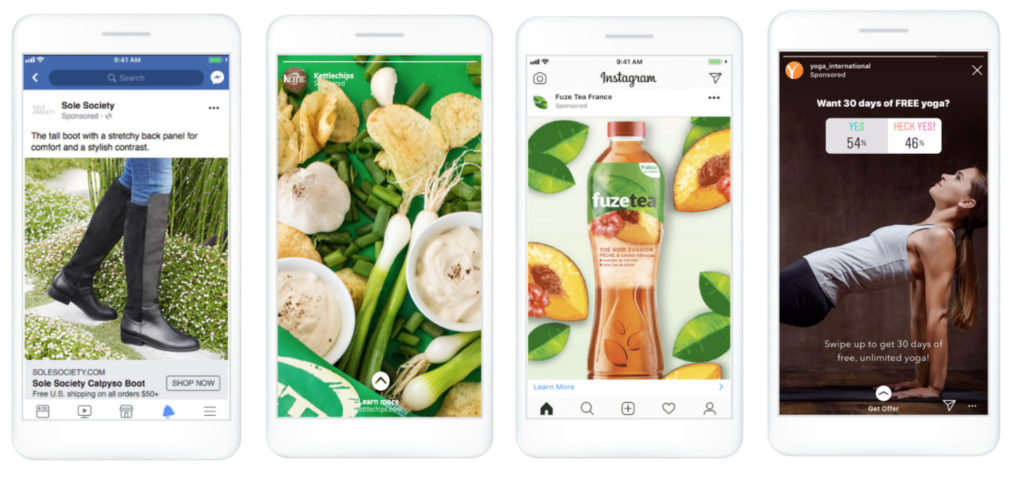
- Facebook: Facebook is an extremely powerful tool for creating local campaigns. Indeed, this platform offers the possibility of creating advertisements in different formats, but also with a high precision of audience targeting. Due to the nature of the platform, Facebook has managed to collect a very large number of user data. This allows for very precise targeting of the audience. The tool is generally very practical for businesses that know their customers' profiles well. For more information, see our article “What are the benefits of Facebook ads for a retail network?
4. Mistakes to avoid when running local ads campaigns
Due to the separation of roles around local campaigns, it is sometimes difficult to manage all communications. Indeed, as the number of stores increases, the more it is necessary to communicate between entities to avoid “stepping on each other’s toes”. The risk is that the headquarters communicates a general campaign and that it competes with the campaign of a point of sale. This is called campaign “cannibalization”.
The phenomenon is multiplying for companies having a separation between their national headquarters and their regional headquarters. In addition to the campaigns of the points of sale and the regional headquarters, it will also be necessary to take into account those launched by the national headquarters.
In the event of cannibalization, the point of sale will lose money because the local campaign is ineffective. But not only! The cost of publishing the campaign will also increase because the price of bids for ad placements will do the same due to the strong competition linked to the headquarters campaign set up in parallel. The cost of publishing the campaign will also increase if at the same time the headquarters and the local are in competition for bids on the same keywords and ad placements.
To avoid this situation, several things need to be done:
- Ensure good communication between the head office(s) and the local entity. First, define the messages to be carried by each. Then, create a communication calendar for these different messages to allow for good synchronization between entities.
- Use geo-location variables on different platforms to create “catchment areas”. It is possible on the platforms to exclude geographical areas where the campaign will not be communicated. The campaigns will therefore be mutually exclusive to one another.
5. The indicators to track for a successful local campaign
For each campaign, it is obviously important to measure its results to understand the impact of the actions and work on continuous improvement.
There are basic indicators:
- Impressions: indicates the number of times we appear on a page for a specific keyword.
- Clicks: indicates the number of times the ad was clicked.
- CPC or “cost per click”: indicates the average cost per click on a local ad. Platforms offer CPC automation to optimize this cost. For example, Google offers the option to set CPC to “enhanced” mode.
- CTR
- CPM or “cost per mille” or “cost per thousand”: simply indicates the average cost for 1000 impressions.
Regarding specialized indicators for points of sale, the tools differ for each platform. For Google, there is the possibility of using Store Visit and Store Sales, which are particularly useful tools for reporting on "o2o" or "online to offline" strategy (for more information, see our article "What is O2O traffic?"). As for Facebook, reporting on campaigns with a "in-store traffic" strategy will provide all the interesting figures for a physical point of sale.
It is suggested to experiment with your campaigns. Indeed, the format, visuals, budget and other variables will have a significant impact on the results. In addition, everything depends on the objective of the campaign. Experimentation will identify what works best for your network of brands.
In case of questions...
[th-button text="Contact us" href="mailto:[email protected]"]
Save time and gain visibility from today
Schedule a personalized demo and see how the platform optimizes every local action in your network.


Latest articles
Discover other selected articles to further explore the topic. To continue exploring the levers that really make a difference for your points of sale.
%20(1).webp)